

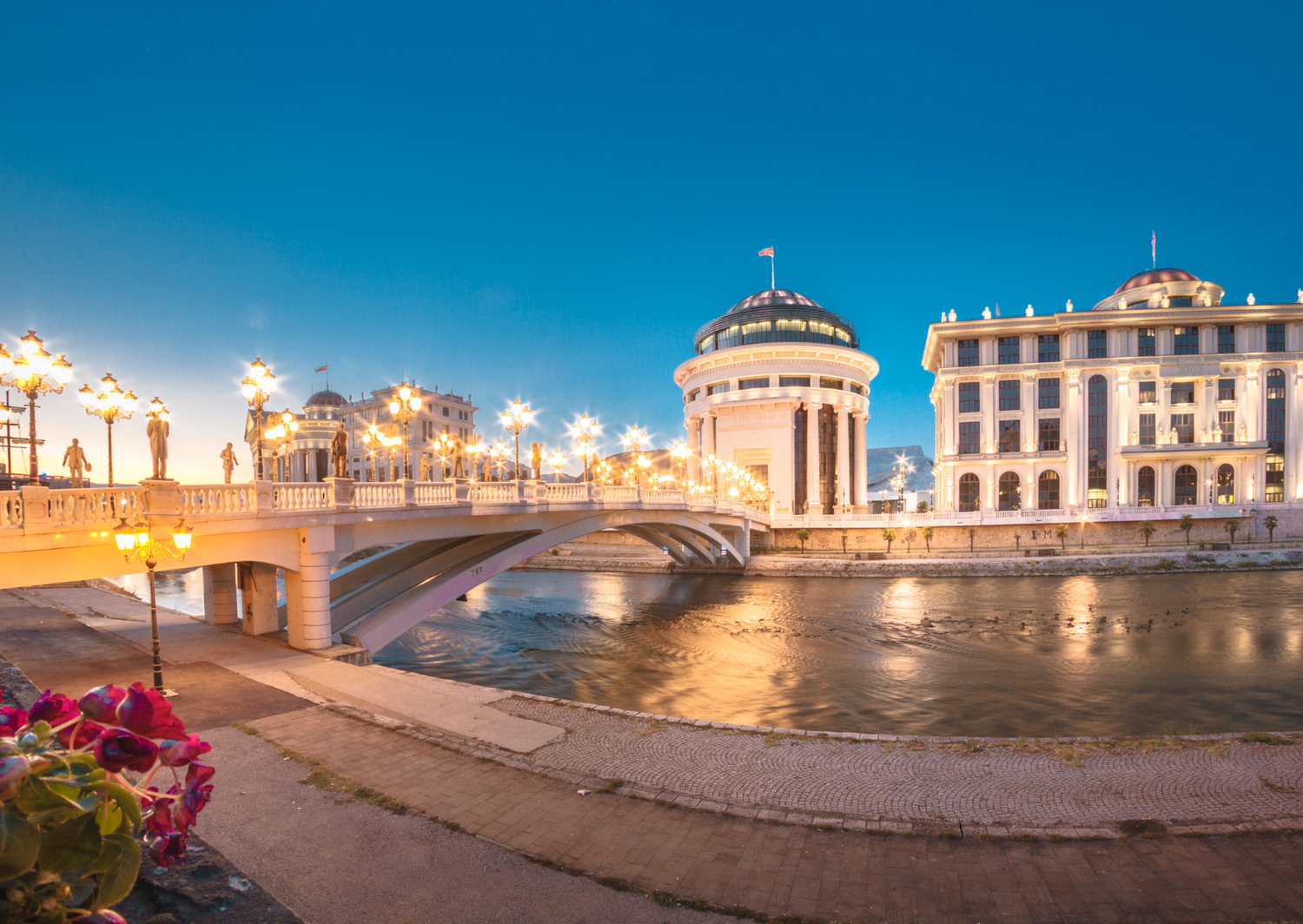
Skopje is an unusual mix of old and new. It is an ancient city but its most recent earthquake in 1983 has allowed the city planners to redraw the city centre. Through the heart of the centre is the Vardar River neatly dividing it into its western components and its eastern characteristics.
In the western district (south bank) you have wide streets, enormous statues, cafes, boutiques and modern hotels. Dominating the skyline is King Philip on his charging horse high on a plinth. Nearby is a heart-warming fountain dedicated to women in their traditional roles as wives and mothers. On this side you can find Mother Thersea’s memorial house and remainers of her wide sayings. If you get a chance to visit her do try and get to the peaceful chapel at the top of the small structure.
 In the eastern district (north bank) are the souks, hammam, mosques and narrow streets filled with tiny shops. You could be forgiven for thinking you were in the Middle East. The coffee shops are causal affairs with offering of sweets and hookers. This is a great space to wander around and find an unexpected treasure in a hidden corner.
Skopje is ancient and there is evidence it was founded in the Neolithic period and was inhabited up until a terrible earthquake in 518 CE. When it was rebuilt, it has a complicated history of bouncing from one invader to another: Serbian, Ottoman, Balkan, Yugoslavia and Soviet. I tis little wonder there is such a mix of race and culture in one small place. In 1991 when North Macedonia became independent Skopje became its capital.
 So, when you visit this unusual capital, take time to browse the wide avenues and drink a wine at an open-door café before passing Philip on his horse, crossing the bridge and diving into the cramped world of an eastern souk.

Leave a comment
This site is protected by hCaptcha and the hCaptcha Privacy Policy and Terms of Service apply.