

Time to play ‘Spot the face of the local guide’; yes that’s right, each individual terracotta warrior was modelled after a living person – even to the extent whether the person was slim or tubby. Even after 2,000 thousand years it’s possible to recognise unique facial characteristics. So, what, where and why?
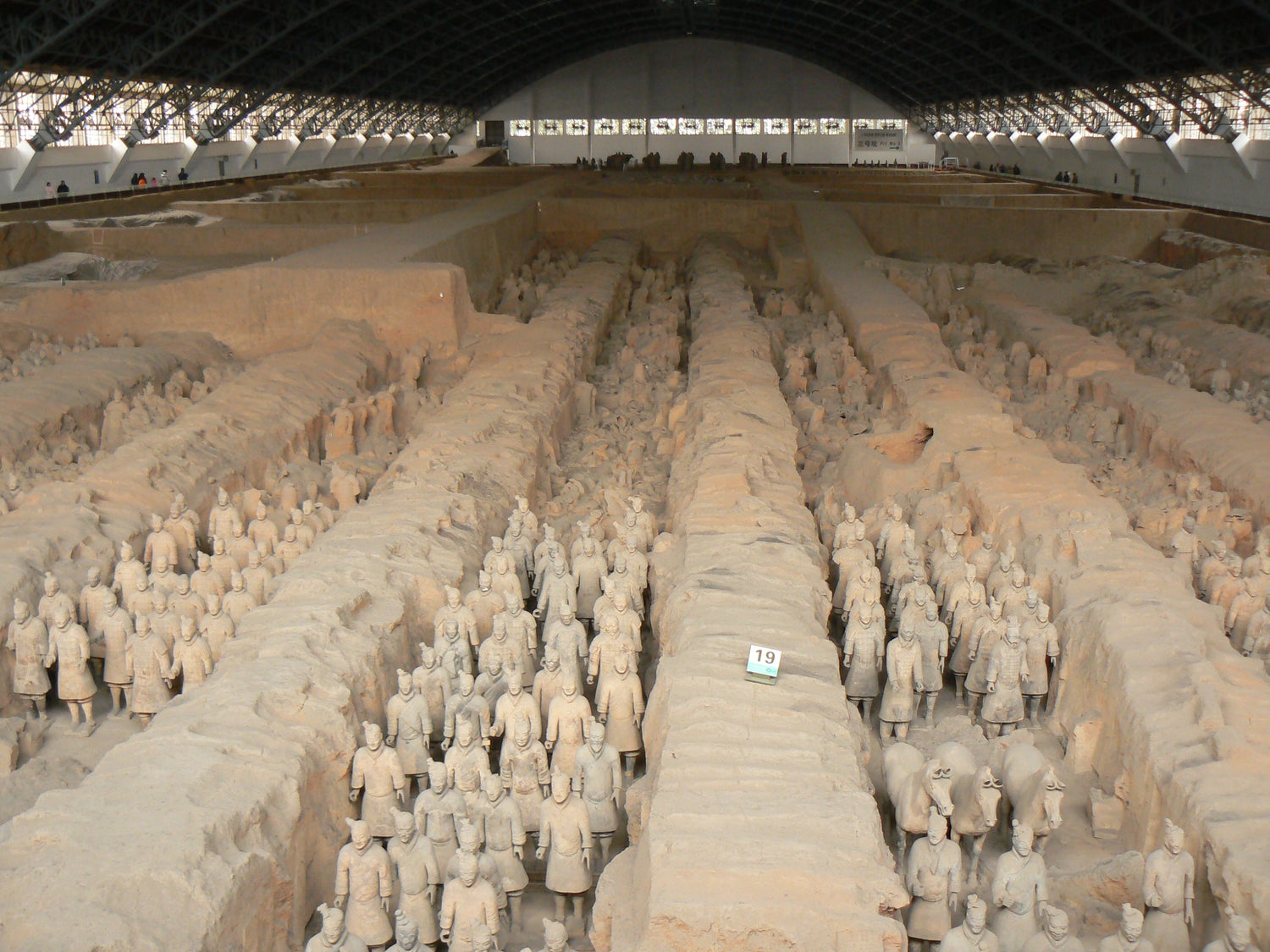
This vast army of Terracotta Warriors was made to protect Emperor Qin Shi Huang’s tomb. They are on the outskirts of Xian and stand to the east of his funeral mound. To date the emperor has not been uncovered as his tomb is surrounded by a river of mercury. Within the army are soldiers of different heights according to their rank, the tallest being generals. Alongside the soldiers are also terracotta horses, (my favourite), chariots and assorted officials, acrobats, strongmen and musicians.

It is an extraordinary story how this army was rediscovered, as it was pure accident that local farmers digging a well happened upon a terracotta head. Today when you look upon the rank and file of soldiers, this well site is just on the edge of the lines of figures. Then there is the feat of the archaeologists who put the figures back together. They had all been knocked over during the peasant uprising soon after the Emperor’s death. Burnt and buried for centuries the archaeologists found a vast jigsaw which they painstakingly put back together. In fact not all the figures have been uncovered and some of the area remains under soil. Future specialists might have better tools and methods of restoring the soldiers.

When they were made the warriors were brightly coloured, however as soon as oxygen finds the uncovered surfaces the paint vanishes and the raw terracotta remains.
When we visit the Terracotta Army we usually start in Pit 1, the original site of discovery. This pit is only part of 98 sq kms of the necropolis constructed for the emperor and resembles a microcosm of his palace and compound. The pit Is the largest excavation pit with that familiar sight of soldiers standing four across with a wall of clay between the rows. Here there are more than 3,000 statues within eleven parallel corridors paved with small bricks.
Moving on to Pit 2, we find the cavalry and infantry units include war chariots. Pit 3 is the command post and Pit 4 is empty as it was unfinished (the Emperor died unexpectedly while on a royal inspection).
All the details of the armour, the weapons and the stances of the soldiers I will leave until we visit the site together. So come with me and explore one of the rediscovered wonders of the world.


Leave a comment
This site is protected by hCaptcha and the hCaptcha Privacy Policy and Terms of Service apply.